Luge at 2026 Winter Olympics: How it works, competition schedule - GREEN MAG

ShowBiz & Sports Celebs Lifestyle

Hot

4.2.26

Luge at 2026 Winter Olympics: How it works, competition schedule

Luge at 2026 Winter Olympics: How it works, competition schedule

MILAN — The title for the fastest sport at the2026 Winter OlympicsinMilano Cortinabelongs to luge.
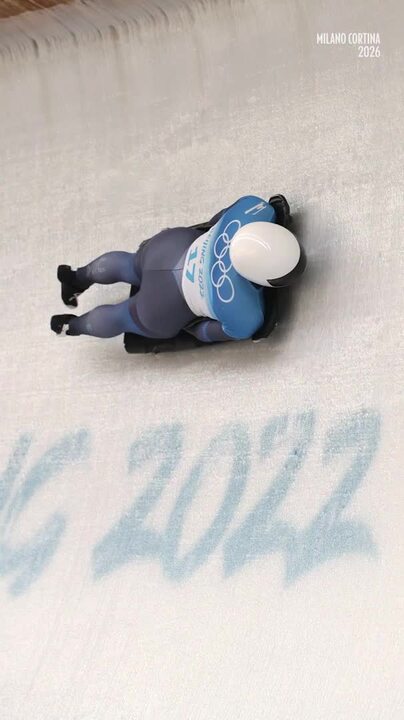
USA TODAY Sports

Athletes will reach speeds of nearly 100 mph as they race feet-first down an icy track on a tiny sled at the Cortina Sliding Centre, the same track that'll be used for bobsled and skeleton. Luge sleds don't have brakes or a steering wheel, so athletes have to use their body to navigate twists and turns at lightening speed.

USA Luge is in pursuit of its first Olympic gold medal. The U.S. has won six Olympic luge medals all-time, including three silver and three bronze medals, most recently Chris Mazdzer's bronze in the men's single event in Pyongchang in 2018. U.S. lugers will have more chances to medal with women's doubles set to make its Olympic debut in Milano Cortina.

The Olympic ice skating rink stands in the Alpine village of Chamonix, France. The sports competitions held in Chamonix between Jan. 25 and Feb. 5, 1924, originally called Semaine des Sports d'Hiver ( English speed skaters training in Chamonix for the Winter Olympic Games on Jan. 16, 1924. From left to right, B. H. Sutton, L. H. Cambridgeshire and A. E. Tibbet. The Toronto Granites amateur ice hockey team, representing Canada at the Winter Olympics, after their 6-1 victory over the United States in the final at the Stade Olympique, in Chamonix, France on Feb. 3, 1924. Norwegian ski jumper Jacob Tullin Thams takes flight as he competes in the ski jump event of the 1924 Winter Olympics in Chamonix, France on Feb. 4, 1924. The British Curling team during the Winter Olympics at Chamonix, France. Norwegian figure skater Sonja Henie during the Winter Olympic Games in which she finished 8th. Born in Oslo in 1912, Henie is considered to be the greatest woman figure skater of all times, after winning 3 Olympic titles in 1928 (St Moritz, Switzerland), 1932 (Lake Placid, USA) and 1936 (Garmisch-Partenkirchen, Germany) and 10 world championships titles in a row (1927-1936). After turning professional, she starred in 10 movies, became a US citizen in 1941, divorced twice before marrying her childhood sweetheart, Norwegian shipowner Niels Onstad. She died of leukemia at the age of 57. The Canadian ice hockey team, the Toronto Granites, scoring during the final in which they beat the United States in the final 6-1 to take the gold medal. The British four-man bobsleigh team in action at the Winter Olympics at Chamonix, February 1924. The team, Ralph Broome, Thomas Arnold, Alexander Richardson and Rodney Soher, took silver in the event. A group of American speed skaters practicing for the 1924 Winter Olympics at Chamonix, France. Belgian figure skater Freddy Mesot poses during a training session ahead of the 1924 Winter Olympics in Chamonix, France on Jan. 16, 1924. The competitors being taken to the starting point of the bobsleigh event of the 1924 Winter Olympics, at the Piste de Bobsleigh des Pellerins, a bobsleigh track in Chamonix, France on Feb. 2, 1924. The track was constructed for the 1924 Games. Delegates of the competing nations gathered near Saint-Michel Church and the Hotel de Ville for the opening ceremony of the 1924 Winter Olympics in Chamonix, France on Jan. 25, 1924. American speed skater Charles Jewtraw competing in the men's 500 meters speed skating event of the 1924 Winter Olympics, at the Stade Olympique de Chamonix in Chamonix, France on Jan. 26, 1924. Jewtraw won gold, becoming the first ever Winter Olympics gold medallist as these were the inaugural Winter Olympics. Herma Planck-Szabo of Austria on her way to winning the women's figure skating gold medal at the 1924 Chamonix Winter Olympics.

Historic images look back at the first Winter Olympics in 1924

When did luge become a Winter Olympic sport?

Luge made its Olympic debut at the 1964 Innsbruck Winter Games. The team relay was added to the program in Sochi in 2014 and women's doubles will be contested for the first time in Milano Cortina.

Advertisement

How does Olympic luge work?

There are five luge events for men and women:

  • Singles (men and women): Four heats over two days. The competitor with the lowest combined time wins.

  • Doubles (men and women): Each pair completes two runs in a single day. The team with the fastest cumulative time wins.

  • Team relay: This event features four events – women's singles, men's singles, women's doubles and men's doubles. The women's luger goes first and after the competitor reaches the bottom of the track, the male competitor starts, finishing with women's and men's doubles. The team with the lowest cumulative time wins.

Emily Fischnaller (USA) races in the Women Luge Singles Run 1 at Mt Van Hoevenberg on Dec 19, 2025 in Lake Placid, NY.

Top Team USA athletes

  • Emily Fischnaller: The 32-year-old won bronze at the 2019 and 2025 World Championships to become the second American to win multiple luge singles medals. She's looking to improve upon her 26th finish at the 2022 Beijing Games. Fischnaller also competed at the 2018 Pyongchang Games, but suffered a fractured back and neck in a crash during the women's singles event.

International landscape

Germany swept all four gold medals at the 2022 Beijing Winter Games and has won the most Luge Olympic medals of any country, with 43 total medals and 22 gold.

Olympic luge schedule

  • Feb. 7: Men's singles Runs 1 and 2

  • Feb. 8: Men's singles Runs 3 and 4

  • Feb. 9: Women's singles Runs 1 and 2

  • Feb. 10: Women's singles Runs 3 and 4

  • Feb. 11: Women's doubles Runs 1 and 2; Men's doubles Runs 1 and 2

  • Feb. 12: Team relay

The USA TODAY app gets you to the heart of the news — fast.Download for award-winning coverage, crosswords, audio storytelling, the eNewspaper and more.

This article originally appeared on USA TODAY:Luge at 2026 Winter Olympics: How it works, what to know