GREEN MAG

ShowBiz & Sports Celebs Lifestyle

Hot

4.2.26

Luge at 2026 Winter Olympics: How it works, competition schedule

12:22:00 AM
Luge at 2026 Winter Olympics: How it works, competition schedule

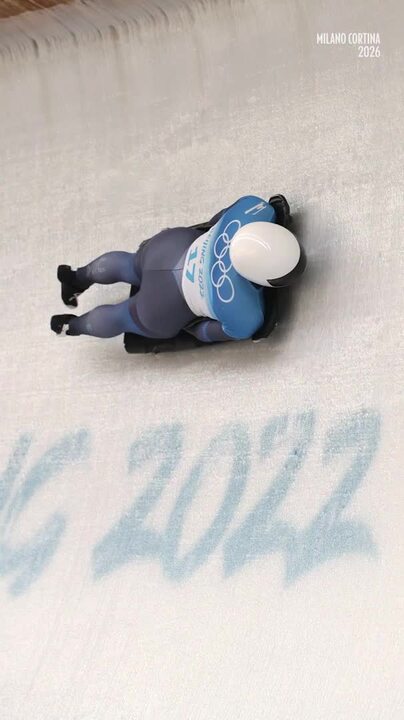
MILAN — The title for the fastest sport at the2026 Winter OlympicsinMilano Cortinabelongs to luge.
USA TODAY Sports

Athletes will reach speeds of nearly 100 mph as they race feet-first down an icy track on a tiny sled at the Cortina Sliding Centre, the same track that'll be used for bobsled and skeleton. Luge sleds don't have brakes or a steering wheel, so athletes have to use their body to navigate twists and turns at lightening speed.

USA Luge is in pursuit of its first Olympic gold medal. The U.S. has won six Olympic luge medals all-time, including three silver and three bronze medals, most recently Chris Mazdzer's bronze in the men's single event in Pyongchang in 2018. U.S. lugers will have more chances to medal with women's doubles set to make its Olympic debut in Milano Cortina.

The Olympic ice skating rink stands in the Alpine village of Chamonix, France. The sports competitions held in Chamonix between Jan. 25 and Feb. 5, 1924, originally called Semaine des Sports d'Hiver ( English speed skaters training in Chamonix for the Winter Olympic Games on Jan. 16, 1924. From left to right, B. H. Sutton, L. H. Cambridgeshire and A. E. Tibbet. The Toronto Granites amateur ice hockey team, representing Canada at the Winter Olympics, after their 6-1 victory over the United States in the final at the Stade Olympique, in Chamonix, France on Feb. 3, 1924. Norwegian ski jumper Jacob Tullin Thams takes flight as he competes in the ski jump event of the 1924 Winter Olympics in Chamonix, France on Feb. 4, 1924. The British Curling team during the Winter Olympics at Chamonix, France. Norwegian figure skater Sonja Henie during the Winter Olympic Games in which she finished 8th. Born in Oslo in 1912, Henie is considered to be the greatest woman figure skater of all times, after winning 3 Olympic titles in 1928 (St Moritz, Switzerland), 1932 (Lake Placid, USA) and 1936 (Garmisch-Partenkirchen, Germany) and 10 world championships titles in a row (1927-1936). After turning professional, she starred in 10 movies, became a US citizen in 1941, divorced twice before marrying her childhood sweetheart, Norwegian shipowner Niels Onstad. She died of leukemia at the age of 57. The Canadian ice hockey team, the Toronto Granites, scoring during the final in which they beat the United States in the final 6-1 to take the gold medal. The British four-man bobsleigh team in action at the Winter Olympics at Chamonix, February 1924. The team, Ralph Broome, Thomas Arnold, Alexander Richardson and Rodney Soher, took silver in the event. A group of American speed skaters practicing for the 1924 Winter Olympics at Chamonix, France. Belgian figure skater Freddy Mesot poses during a training session ahead of the 1924 Winter Olympics in Chamonix, France on Jan. 16, 1924. The competitors being taken to the starting point of the bobsleigh event of the 1924 Winter Olympics, at the Piste de Bobsleigh des Pellerins, a bobsleigh track in Chamonix, France on Feb. 2, 1924. The track was constructed for the 1924 Games. Delegates of the competing nations gathered near Saint-Michel Church and the Hotel de Ville for the opening ceremony of the 1924 Winter Olympics in Chamonix, France on Jan. 25, 1924. American speed skater Charles Jewtraw competing in the men's 500 meters speed skating event of the 1924 Winter Olympics, at the Stade Olympique de Chamonix in Chamonix, France on Jan. 26, 1924. Jewtraw won gold, becoming the first ever Winter Olympics gold medallist as these were the inaugural Winter Olympics. Herma Planck-Szabo of Austria on her way to winning the women's figure skating gold medal at the 1924 Chamonix Winter Olympics.

Historic images look back at the first Winter Olympics in 1924

When did luge become a Winter Olympic sport?

Luge made its Olympic debut at the 1964 Innsbruck Winter Games. The team relay was added to the program in Sochi in 2014 and women's doubles will be contested for the first time in Milano Cortina.

Advertisement

How does Olympic luge work?

There are five luge events for men and women:

  • Singles (men and women): Four heats over two days. The competitor with the lowest combined time wins.

  • Doubles (men and women): Each pair completes two runs in a single day. The team with the fastest cumulative time wins.

  • Team relay: This event features four events – women's singles, men's singles, women's doubles and men's doubles. The women's luger goes first and after the competitor reaches the bottom of the track, the male competitor starts, finishing with women's and men's doubles. The team with the lowest cumulative time wins.

Emily Fischnaller (USA) races in the Women Luge Singles Run 1 at Mt Van Hoevenberg on Dec 19, 2025 in Lake Placid, NY.

Top Team USA athletes

  • Emily Fischnaller: The 32-year-old won bronze at the 2019 and 2025 World Championships to become the second American to win multiple luge singles medals. She's looking to improve upon her 26th finish at the 2022 Beijing Games. Fischnaller also competed at the 2018 Pyongchang Games, but suffered a fractured back and neck in a crash during the women's singles event.

International landscape

Germany swept all four gold medals at the 2022 Beijing Winter Games and has won the most Luge Olympic medals of any country, with 43 total medals and 22 gold.

Olympic luge schedule

  • Feb. 7: Men's singles Runs 1 and 2

  • Feb. 8: Men's singles Runs 3 and 4

  • Feb. 9: Women's singles Runs 1 and 2

  • Feb. 10: Women's singles Runs 3 and 4

  • Feb. 11: Women's doubles Runs 1 and 2; Men's doubles Runs 1 and 2

  • Feb. 12: Team relay

The USA TODAY app gets you to the heart of the news — fast.Download for award-winning coverage, crosswords, audio storytelling, the eNewspaper and more.

This article originally appeared on USA TODAY:Luge at 2026 Winter Olympics: How it works, what to know

Read More

Curling at 2026 Winter Olympics: How it works, competition schedule

12:22:00 AM
Curling at 2026 Winter Olympics: How it works, competition schedule

MILAN —Curlinghas emerged as a cult classic at theWinter Olympics.

The U.S. will be represented in all three curling events the2026 Milan Cortina Games, with Team Casper competing in the men's curling event afterJohn Shuster'sbid to compete at his sixth consecutive Winter Games fell short. Team Peterson and the duo of Cory Thiesse and Korey Dropkin will also represent Team USA in the women's curling event and mixed doubles, respectively.

All three teams will look to win Team USA's first curling medal in eight years. The U.S. has only won two curling medals in Olympic history, most notably a gold medal won by Team Shuster in the men's event at the 2018 Pyeongchang Games. The U.S. hasn't made the Olympic podium in the women's or mixed doubles events.

Korey Dropkin poses for a photo during the U.S. Olympic Team Media Summit in preparation for the 2026 Milan Olympic Winter Games at Javits Center in NYC on Oct. 28, 2025. Korey Dropkin of the U.S. in action during the match against Canada at the World Men's Curling Championship Moose Jaw, Saskatchewan, Canada on April 4, 2025. Korey Dropkin of the U.S. in action during the match against Canada at the World Men's Curling Championship Moose Jaw, Saskatchewan, Canada on April 4, 2025. Korey Dropkin and Team USA in action during the match against Norway at the World Men's Curling Championship Moose Jaw, Saskatchewan, Canada on April 2, 2025. Curling - World Men's Curling Championship - Mosaic Place, Moose Jaw, Saskatchewan, Canada - March 30, 2025 Korey Dropkin of the U.S. reacts during their match against Switzerland at the World Men's Curling Championship, Mosaic Place, Moose Jaw, Saskatchewan, Canada on March 30, 2025. Korey Dropkin, Mark Fenner, Tom Howell and Andrew Stopera of the U.S. during their match against Switzerland at the World Men's Curling Championship in Moose Jaw, Saskatchewan, Canada on March 30, 2025. Korey Dropkin of the U.S. reacts during his match against Italy at the World Men's Curling Championship at Mosaic Place, Moose Jaw, Saskatchewan, Canada on March 29, 2025. Korey Dropkin (center) sends the rock down the ice during U.S. Olympic Team Trials for Curling at Baxter Arena in Omaha, Nebraska on Nov. 21, 2021. Korey Dropkin reacts during U.S. Olympic Team Trials for Curling at Baxter Arena in Omaha, Neb. on Nov. 21, 2021. Korey Dropkin of the United States delivers a stone during Game 3 of the US Olympic Team Trials at Baxter Arena on Nov. 21, 2021 in Omaha, Neb. Korey Dropkin of the United States delivers a stone during the US Olympic Team Trials at Baxter Arena on Nov. 21, 2021 in Omaha, Neb. Korey Dropkin watches the rock during U.S. Olympic Team Trials for Curling at Baxter Arena on Nov. 21, 2021 in Omaha, Neb. Korey Dropkin of the United States watches action during Game 2 of the US Olympic Team Trials at Baxter Arena on Nov. 20, 2021 in Omaha, Neb. Korey Dropkin of the United States delivers a stone during Game 2 of the US Olympic Team Trials at Baxter Arena on Nov. 20, 2021 in Omaha, Neb. Korey Dropkin of the United States watches after delivering a stone during Game 1 of the US Olympic Team Trials at Baxter Arena on Nov. 19, 2021 in Omaha, Neb.

Meet Korey Dropkin, Mixed doubles curler for Team USA

When did curling become a Winter Olympic sport?

Men's curling was part of the inaugural 1924 Chamonix Winter Games, but it was held as a demonstration event in 1932 at Lake Placid, in 1988 at Calgary and in 1992 at Albertville. Men and women's curling were officially added to the program for the 1998 Nagano Olympic Winter Games, while mixed doubles made its debut at Pyeongchang in 2018.

How does Olympiccurlingwork?

Two teams of four people each take turns gliding 44-pound stones down a sheet of ice toward a target that looks like a bullseye. Each match features six to 10 rounds, called ends. The stones have a handle on them, so when they are released, they curl down the ice. As the stone glides toward the target, players sweep the ice in front of it, which can affect the direction and the speed of the stone.

During each round, teams take turns throwing eight rocks, and the team with the rock or rocks closest to the center of the target wins the end. Players can throw guards to block the target, draws to try to score or takeouts to remove the opponent's stones as each end plays out. There are three curling events:

  • Men's curling

  • Women's curling

  • Mixed doubles

Who are the top Team USA athletes incurling?

  • Cory Thiesse and Korey Dropkin: The duo is set to make its Olympic debut in mixed doubles at the 2026 Milano Cortina Winter Games after becoming the first U.S. mixed doubles team to win gold at the world championships in 2023. Thiesse will also represent Team U.S. in the women's curling event.

  • Danny Casper: The 24-year-old skipper leads Team Casper, which dethroned Team Shuster at the 2025 U.S. Olympic Curling Trials. Team Casper is also made up of Luc Violette (third), Ben Richardson (second), Aidan Oldenburg (lead) and Rich Ruohonen (alternate).

  • Tabitha Peterson: The 36-year-old skipper leads Team Peterson, which won the 2025 U.S. Olympic Curling Trials and earned the final berth in the women's competition in the 2026 Winter Games. Team Peterson also includes Cory Thiesse (third), Tara Peterson (second) and Taylor Anderson-Heide (lead).

International landscape

Canada holds the most Olympic curling medals with 12 overall, including six gold medals between all events, the most of any country. Sweden is a close second with 11 total medals and four golds, including a gold in the men's event in Beijing 2022, in addition to a bronze in the women's event and mixed doubles.

Olympic curling schedule

  • Feb. 4-10: Mixed doubles round robin with semifinals on Feb. 9 and medal games on Feb. 10.

  • Feb. 11-19: Men's and women's round robin

  • Feb. 19: Men's semifinals

  • Feb. 20: Women's semifinals; men's bronze medal game

  • Feb. 21: Women's bronze medal game; men's gold medal game

  • Feb. 22: Women's gold medal game

The USA TODAY app gets you to the heart of the news — fast.Download for award-winning coverage, crosswords, audio storytelling, the eNewspaper and more.

This article originally appeared on USA TODAY:Curling at 2026 Winter Olympics: How it works, what to know

Read More

Alpine skiing at 2026 Winter Olympics: How it works, competition schedule

12:22:00 AM
Alpine skiing at 2026 Winter Olympics: How it works, competition schedule

MILAN — The biggest names in Alpine skiing are set to hit the slopes at the2026 Winter OlympicsinMilano Cortina.

Mikaela Shiffrin,Lindsey Vonnand Ryan Cochran-Siegle are some of the stars representing Team USA in Alpine skiing, where athletes race against the clock to record the fastest time down a mountain. Shiffrin is looking to bounce back from the 2022 Beijing Winter Olympics, where she walked away with no medals after multiple DNFs in her signature events (slalom, giant slalom). Vonn is set to appear in her fifth Olympic Games, despite sufferinga complete tear of the ACLin her left knee ina downhill crashon Jan. 30. Cochran-Siegle, who's at his third Olympics, won silver in super-G in 2022.

Men's Alpine skiing events will be held at the Stelvio Ski Centre in Bormio, while the women's events will be at the Tofane Alpine Skiing Centre in Cortina d'Ampezzo.

When did Alpine skiing become a Winter Olympic sport?

Alpine skiing has been part of the Winter Olympic Games since 1936, when combined (downhill + slalom) was first contested at the 1936 Garmisch-Partenkirchen Games. Downhill and slalom were added to the program as separate events at the 1948 St. Moritz Winter Olympics. Giant slalom was introduced in Oslo in 1952 and super-G (also known as super giant slalom) made its debut in Calgary in 1988.

How does Olympic Alpine skiing work?

Alpine skiing includes a total of 10 events, with men and women each competing in downhill and super-G, the fastest and steepest events, in addition to giant slalom and slalom, the more technical and twisty races that require skiers to zig-zag around gates or poles. The team combined will make its debut in Milano Cortina.

  • Downhill: The event features longer distances between the gates and is considered the fastest Alpine skiing event. Racers get one run down the mountain. The winner is determined by the fastest time.

  • Super-G: The event combines the speed of downhill with the precision of slalom. It features wider curves than the other two slalom races and is held on the same slope as downhill. Athletes get one run down the mountain. The winner is determined by the fastest time.

  • Giant slalom: The fastest technical event has shorter distances between the gates compared to super-G, but has longer spacing than slalom. Each athlete gets two runs down the mountain and the winner is determined by the best combined time.

  • Slalom: The most technical race has the shortest distances between the gates, requiring skiers to make sharp turns and quickly change directions. Each athlete gets two runs down the mountain. The winner is determined by the best combined time.

  • Team combined: Two athletes from the same country team up for this event. One skis downhill, while the other competes in slalom. The winner is determined by best combined time.

Who are Team USA's top Alpine skiers?

  • Mikaela Shiffrin: The three-time Olympian is widely considered one of the greatest Alpine skiers of all time and owns more World Cup wins than any skier in history. She won gold in the slalom in 2014 Sochi and giant slalom at 2018 Pyeongchang, in addition to a silver in Alpine combined in 2018. Shiffrin and Breezy Johnson won gold at the 2025 World Championships in team combined.

  • Lindsey Vonn: Vonn became the first American woman to win Olympic gold in downhill at the 2010 Vancouver Winter Games. The 41-year-old also has a bronze medal in super-G (2010 Vancouver) and downhill (2018 Pyeongchang). Vonn retired from competitive skiing in 2019 due to multiple injuries, but returned to competition in 2024 and qualified for her fifth Winter Olympic Games. She suffered an ACL tear in a Jan. 30 crash, but said on Feb. 3 that she's "confident" she'll be able to ski in the downhill on Feb. 8.

  • Ryan Cochran-Siegle: The two-time Olympian won a silver medal in super-G at the 2022 Beijing Winter Olympics, the lone American Alpine skiing medal during the Beijing Games.

Alpine skiing's International landscape

Switzerland and Austria dominated Alpine skiing at the 2022 Beijing Winter Olympics. Switzerland earned nine total medals (five gold) and Austria won seven (three gold).

Olympic Alpine skiing schedule

  • Feb. 7: Downhill

  • Feb. 9: Team combined

  • Feb. 11: Super-G

  • Feb. 14: Giant slalom

  • Feb. 16: Slalom

  • Feb. 8: Downhill

  • Feb. 10: Team combined

  • Feb. 12: Super-G

  • Feb. 15: Giant slalom

  • Feb. 18: Slalom

The USA TODAY app gets you to the heart of the news — fast.Download for award-winning coverage, crosswords, audio storytelling, the eNewspaper and more.

This article originally appeared on USA TODAY:Alpine skiing at 2026 Winter Olympics: How it works, what to know

Read More

3.2.26

Pakistan sends helicopters, drones to end desert standoff; 58 dead

11:42:00 PM
Pakistan sends helicopters, drones to end desert standoff; 58 dead

By Saleem Ahmed and Asif Shahzad

Reuters A view of damaged vehicles at a police station, following militant attacks, in Quetta, Pakistan, February 1, 2026. REUTERS/Stringer FILE PHOTO: A police officer walks past damage at the site, after militant attacks, in Quetta, Pakistan, February 1, 2026. REUTERS/Stringer/File Photo

Aftermath of millitant attacks, in Quetta

QUETTA, Feb 4 (Reuters) - Pakistan's security forces used drones and helicopters to wrest control of a southwestern town from separatist insurgents after a three-day battle, police said on Wednesday, as the death toll in the weekend's ​violence rose to 58.

Saturday's wave of coordinated attacks by the separatist Baloch Liberation Army brought Pakistan's largest province to a near ‌standstill as security forces exchanged fire with insurgents in more than a dozen places, killing 197 militants.

"I thought the roof and walls of my house were going to blow up," ‌said Robina Ali, a housewife living near the main administrative building in the fortified provincial capital of Quetta, where a powerful morning blast rocked the area.

Fighters of the BLA, the region's strongest insurgent group, stormed schools, banks, markets and security installations across Balochistan in one of their largest operations ever, killing more than 22 security officials and 36 civilians.

Police officials gave details of the situation on condition of anonymity as they were not authorised to speak to ⁠the media.

In the desert town of Nushki, home ‌to about 50,000, the insurgents seized control of the police station and other security installations, triggering a three-day standoff.

Police said seven officers were killed in the fighting before they regained control of the town late on Monday, while ‍operations against the BLA continue elsewhere in the province.

"More troops were sent to Nushki," said one security official. "Helicopters and drones were used against the militants."

Pakistan's interior ministry did not immediately respond to a Reuters request for comment.

LATE NIGHT ATTACKS

Pakistan's largest and poorest province, mineral-rich Balochistan borders Iran and Afghanistan and is home to Beijing's investment ​in the Gwadar deepwater port and other projects.

Advertisement

It has grappled with a decades-long insurgency led by ethnic Baloch separatists seeking greater autonomy and ‌a larger share of its natural resources.

The BLA, which has urged people of the province to support the movement, said on Tuesday it had killed 280 soldiers during its Operation "Herof", Black Storm, but gave no evidence.

Security officials said the weekend attacks began at 4 a.m. on Saturday with suicide blasts in Nushki and the fishing port of Pasni and gun and grenade attacks in 11 more places, including Quetta.

The insurgents seized at least six district administration offices during the siege and had advanced at one point to within 1 km (3,300 ft) of the provincial chief minister's office in ⁠Quetta, the police officials said.

EVOLVING INSURGENCY

Pakistan has blamed India for the attacks, without furnishing ​evidence for charges that could escalate hostilities between the nuclear-powered neighbours who fought their ​worst armed conflict in decades in May.

India's foreign ministry has rejected the charges, saying Islamabad should instead tackle the "long-standing demands of its people in the region".

Retired Lt. General Amir Riaz, who led the military in Balochistan from 2015 to 2017, ‍said the insurgency had evolved over ⁠the last decade.

He added that it gained strength as the BLA received Indian support and used Afghanistan as a staging ground for its attacks, a charge the Taliban government has denied.

Riaz said the conflict would oscillate between stalemate and periods of heightened violence.

"It has ⁠escalated. The response will be decisive, leading to serious capacity degradation of BLA," he said, denying that the Pakistani military has used excessive force in Balochistan.

"However, ultimately the issues ‌are only resolved through political process and governance."

(Reporting by Saleem Ahmed in Quetta and Asif Shahzad in Islamabad; Additional reporting by ‌Ariba Shahid in Karachi; Writing by Saad Sayeed; Editing by Clarence Fernandez)

Read More

Explainer-What is the New START nuclear treaty and why does its expiry matter?

11:42:00 PM
Explainer-What is the New START nuclear treaty and why does its expiry matter?

By Mark Trevelyan

Feb 4 (Reuters) - The last Russia-U.S. nuclear arms control treaty, known as New START, is expiring.

Here is a guide to the treaty and why it matters:

WHO SIGNED NEW START, AND WHAT DID IT SAY?

New START was signed in 2010 by U.S. President Barack Obama and Dmitry Medvedev, an ally ​of Vladimir Putin who served a single term as Russia's president. At the time, relations between the two countries were undergoing a "reset". The treaty came into force ‌the following year.

It set limits on strategic nuclear weapons - the kind that each side would use to strike the opponent's vital political, military and industrial centres in the event of a nuclear war. It capped the number ‌of deployed strategic warheads at 1,550 on each side, with no more than 700 deployed ground- or submarine-launched missiles and bomber planes, and 800 launchers.

WHAT STOPPED EITHER SIDE FROM CHEATING?

The treaty included a system of short-notice, on-site inspections so each side could satisfy itself that the other was complying. But in 2023, Putin suspended Moscow's participation because of U.S. support for Ukraine in the war with Russia. That brought a halt to inspections - which in any case had been suspended during the COVID pandemic - and forced each side to rely on its own intelligence assessments of what the ⁠other was doing. However, both sides said they would stick ‌to the treaty's numerical limits, which have remained in force until now.

WHY DON'T THE TWO SIDES JUST EXTEND THE TREATY?

The treaty text says it can only be extended once, and this has already happened - in 2021, just after Joe Biden became U.S. president. With expiry looming, Putin proposed ‍last September that each side should agree informally to stick to the warhead limits for another year. As of Wednesday, the treaty's final day, U.S. President Donald Trump had not responded.

In the U.S., opinions are divided on whether Trump should have accepted. Those in favour say it would have demonstrated political will to avoid an arms race and bought time to figure out a way forward. Others say the ​U.S. should free itself now from the New START limits in order to boost its arsenal to take account of a rapid nuclear build-up by China, and that doing ‌otherwise would send a signal of weakness.

WHY DOES IT MATTER IF THERE'S NO TREATY?

If Moscow and Washington cease observing mutual limits on their long-range nuclear arsenals, it will mark the end of more than half a century of constraints on these weapons. The expiry of New START leaves a void, as no talks have taken place on a successor. Arms control advocates fear that raises nuclear risks, especially at a time of heightened international tension because of wars in Ukraine and the Middle East. Experts say the value of nuclear treaties lies not just in setting numerical limits but in creating a stable, transparent framework to prevent arms races from spiralling out of control.

WITHOUT A REPLACEMENT DEAL, WHAT MIGHT BOTH SIDES DO?

Each side would ⁠be free to increase its missile numbers and deploy hundreds more strategic warheads. However, experts say this ​poses some technical and logistical challenges and would not happen overnight - it would take at least the best ​part of a year to make significant changes. Longer term, the concern is that an unregulated arms race would ensue, in which each side would keep on adding weapons based on worst-case assumptions about what the other was planning.

WHAT WOULD IT TAKE TO AGREE A REPLACEMENT TO NEW START?

Trump says ‍he wants a new, better treaty but experts ⁠say this would be a long, hard process. A successor treaty would probably need to address other classes of nuclear weapons, including short- and intermediate-range, as well as "exotic" new systems that Russia has developed since New START was agreed, such as the Burevestnik cruise missile and Poseidon torpedo.

Apart from the fact such deals are complex ⁠and technical, there isn't even agreement on who should take part. While Trump has stated he wants to pursue "denuclearisation" with both Russia and China, Beijing says it is unrealistic to ask it to join negotiations with countries ‌whose arsenals are still many times larger than its own. Russia says the nuclear forces of NATO members Britain and France should also be up for ‌negotiation, which those countries reject.

(Reporting by Mark Trevelyan; Editing by Peter Graff and Alex Richardson)

Read More